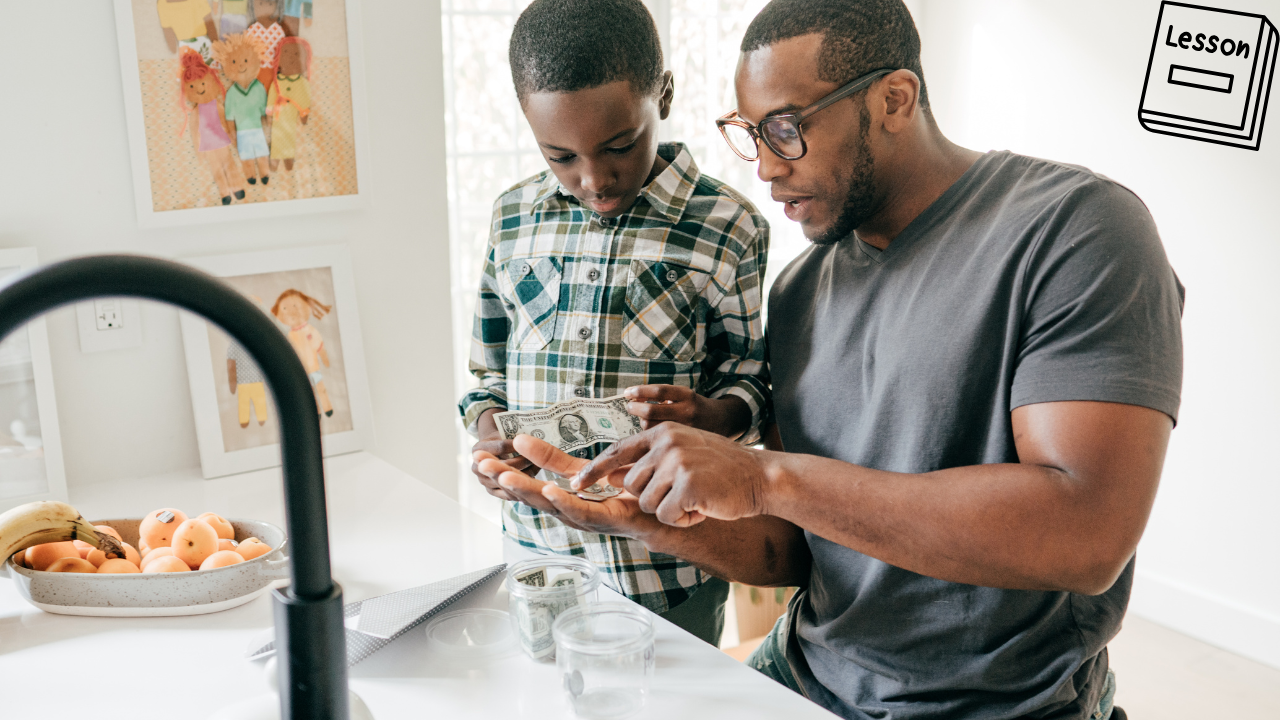
Teaching kids about money early helps shape how they handle earning, spending, saving, and giving for the rest of their lives. Before age 10, children learn best through simple, hands-on experiences rather than lectures. The goal is to make money feel real, understandable, and connected to everyday life.
Below are 35 practical money lessons dads can teach, each paired with a simple activity you can start at home.
1. Money is earned through effort
Children need to learn early that money is not automatic and does not come just from asking. It is connected to effort, time, and helping others. When kids understand this, they begin to respect money more and value what it takes to earn it. It also helps them develop responsibility and pride in contributing at home.
Activity: Create a simple “home job system” where your child earns small amounts of money or rewards for completing tasks like cleaning their room, helping set the table, or picking up toys. Keep it consistent so they understand that effort leads to reward.
2. Money does not come instantly
Kids often think money is always available or can be given immediately, but real life does not work that way. Teaching delayed earning helps them understand patience and structure. It also prepares them for future situations where waiting for paychecks or rewards is normal.
Activity: Set a fixed allowance schedule such as weekly or biweekly and do not give money outside of that schedule. This teaches them that money is planned and earned on a timeline.
3. Saving is the first step, not the last
Most adults struggle with saving because they were never taught to prioritize it early. Teaching children to save first helps build discipline and long-term thinking. It shows them that saving is not optional but part of responsible money behavior.
Activity: Use a clear jar or container and require that a portion of every dollar goes into savings before anything is spent. Let them watch the savings grow over time.
4. Wants and needs are different
Children naturally want many things, but they need to understand that not everything is necessary. Learning the difference between wants and needs helps them make smarter decisions and avoid impulse behavior as they grow.
Activity: During shopping trips, ask your child to identify whether items are wants or needs and explain why. Make it a regular conversation so they build awareness naturally.
5. Every dollar has a purpose
Money should never feel random or unplanned. When children learn that every dollar has a job, they begin to think more intentionally about how they use it. This builds early budgeting skills without making it overwhelming.
Activity: Create three categories together: save, spend, and give. Help them divide any money they receive into these categories so they learn structure.
6. You can’t buy everything
Kids need to understand that money is limited and choices must be made. This helps them learn prioritization and acceptance, which are important life skills.
Activity: Give your child a small budget at the store and allow them to make their own decisions without extra money added. Let them experience limits in a safe environment.
7. Waiting helps you make better choices
Impulse buying leads to regret, even for adults. Teaching kids to pause before buying helps them build patience and self-control, which are essential financial skills.
Activity: Introduce a waiting rule where your child must wait a few days before purchasing anything non-essential. Revisit the item after the waiting period together.
8. Mistakes are part of learning
Children will sometimes spend money poorly or regret choices. These moments are not failures but learning opportunities that help them grow.
Activity: If they spend all their money too quickly, do not replace it. Instead, talk through what happened and what they might do differently next time.
9. Money runs out if you don’t manage it
Kids often think money will always be available, so they need to experience limits. Understanding that money is finite helps them become more responsible.
Activity: Give them a fixed amount of play money or real money and let them make spending choices until it runs out naturally.
10. Work is connected to reward
Effort and reward should be clearly connected so kids understand value. This builds motivation and work ethic early in life.
Activity: Assign simple chores with small rewards so they see a direct link between completing tasks and earning money or privileges.
11. Giving is part of money responsibility
Money is not just for personal use. Teaching kids to give helps them develop empathy and balance in their financial thinking.
Activity: Create a giving jar where a portion of their money is set aside for helping others or donating to a cause they choose.
12. Saving leads to bigger rewards
Kids often want immediate gratification, but saving teaches them that waiting can lead to better outcomes.
Activity: Help them choose a larger goal item and track their savings progress until they can afford it instead of buying smaller items immediately.
13. Spending is a choice
Children should understand that spending is always a decision they control. This builds independence and responsibility.
Activity: Offer two or three spending choices within a set budget and let them decide what they value most.
14. Not everything needs to be bought
Creativity is an important financial skill because it reduces unnecessary spending. Kids can often find joy in creating rather than buying.
Activity: Encourage them to make crafts, build toys, or use imagination instead of buying new items.
15. Money is limited
Understanding limits helps children develop respect for money and prevents unrealistic expectations.
Activity: Set a weekly allowance that does not change even if they run out early so they learn to manage it carefully.
16. You must plan ahead
Planning helps prevent poor decisions and teaches organization skills. Kids should learn to think ahead about how they will use money.
Activity: Sit down each week and help them plan how they will use their money before they spend anything.
17. Comparing prices matters
Smart spending includes understanding value and comparison. This helps kids become thoughtful shoppers.
Activity: Show them two similar items at different prices and discuss which is a better value and why.
18. Quality matters more than quantity
Cheap items may not always last, and children should understand long-term value.
Activity: Compare a cheaper item and a higher-quality item over time and discuss which performs better.
19. Saving takes discipline
Saving is not a one-time action but a habit that requires consistency and patience.
Activity: Create a visual savings chart so they can track progress and stay motivated.
20. Small amounts add up
Kids often underestimate small savings, but over time they can become meaningful.
Activity: Count saved coins or money together regularly to show growth over time.
21. Money decisions have consequences
Every financial choice leads to an outcome, whether good or bad.
Activity: If they spend money early, they must wait until the next allowance period to receive more.
22. You don’t always get what you want
Learning to accept “no” is an important part of emotional and financial maturity.
Activity: Practice calmly saying “not today” during shopping trips and stay consistent.
23. Hard work builds opportunities
Effort leads to growth and future rewards, even beyond money.
Activity: Offer slightly higher rewards for more challenging chores or responsibilities.
24. Patience saves money
Waiting helps prevent regretful spending and impulsive decisions.
Activity: Use a waiting period before allowing any non-essential purchase.
25. Budgeting is simple planning
Even young kids can understand basic budgeting when it is broken down simply.
Activity: Help them divide money into spending categories before they use it.
26. Money can grow over time
Saving consistently shows children that money can build gradually.
Activity: Show them how savings increase each week or month with simple tracking.
27. Sharing builds character
Giving helps children understand empathy and community responsibility.
Activity: Set aside a portion of their money specifically for donating or helping others.
28. You should track your money
Awareness is key to making better decisions and avoiding waste.
Activity: Have them write down what they spend in a small notebook or chart.
29. Choices matter more than income
How money is used is just as important as how much is earned.
Activity: Give them simple decision-making scenarios where they must choose between options.
30. Needs come first
Basic needs should always be prioritized before wants or extras.
Activity: Have them sort items at home into needs and wants to reinforce the concept.
31. Money should not be emotional
Spending should be thoughtful, not based on feelings like excitement or frustration.
Activity: Teach them to pause and think before making any purchase decision.
32. Goals make saving easier
Having a purpose makes saving more meaningful and motivating.
Activity: Help them create a visual goal chart for something they want to buy.
33. Hard work is rewarded over time
Consistency matters more than quick results.
Activity: Offer rewards for completing chores consistently over a period of time.
34. Money is a tool, not a toy
Money is meant to serve real needs in life, not just be spent for fun.
Activity: Talk through real-life uses of money like food, housing, and bills in simple terms.
35. Good habits matter more than big amounts
Small habits practiced consistently shape long-term financial success.
Activity: Focus on weekly routines around saving, spending, and giving instead of one-time lessons.
FAQs: Best Kids Savings Accounts
1. What is the best savings account for kids?
The best kids savings accounts are usually offered by major banks or credit unions that have no monthly fees, no minimum balance requirements, and allow parental oversight. Popular options often include Capital One Kids Savings, Chase First Banking, and Ally Bank Kids Savings.
2. Can a child under 10 open a savings account?
Yes, but a parent or guardian must open it as a joint account or custodial account. The adult manages the account while the child learns how saving works.
3. How much money should a child keep in a savings account?
There is no required amount. Many families start with small deposits like birthday money, allowance savings, or chore earnings. The goal is learning consistency, not large balances.
4. Should kids use a bank or credit union for savings?
Both are good options. Credit unions often have lower fees and more personalized service, while banks may offer better digital tools. The best choice depends on what is local and accessible.
5. What age should a child get a savings account?
Many parents open accounts between ages 5 and 10 when children can start understanding saving, tracking money, and basic budgeting concepts.
6. Do kids savings accounts earn interest?
Yes, most do earn interest, but rates are usually small. The main benefit is learning financial habits rather than earning significant returns.
7. Can kids access their savings anytime?
Yes, but parents usually help manage withdrawals. The goal is to teach thoughtful spending rather than frequent access.
8. What should parents teach kids about bank accounts?
Parents should teach that banks safely hold money, savings grow over time, and money should be planned rather than spent immediately. It is also important to show kids how deposits and withdrawals work in simple terms.
Final Thought
These lessons are most powerful when they are taught through everyday life instead of formal lectures. Grocery store trips, allowance time, chores, and simple conversations all become opportunities to build financial understanding. When dads consistently reinforce these 35 lessons before age 10, kids grow up with stronger confidence, better decision-making skills, and a healthy, balanced relationship with money that lasts into adulthood.